

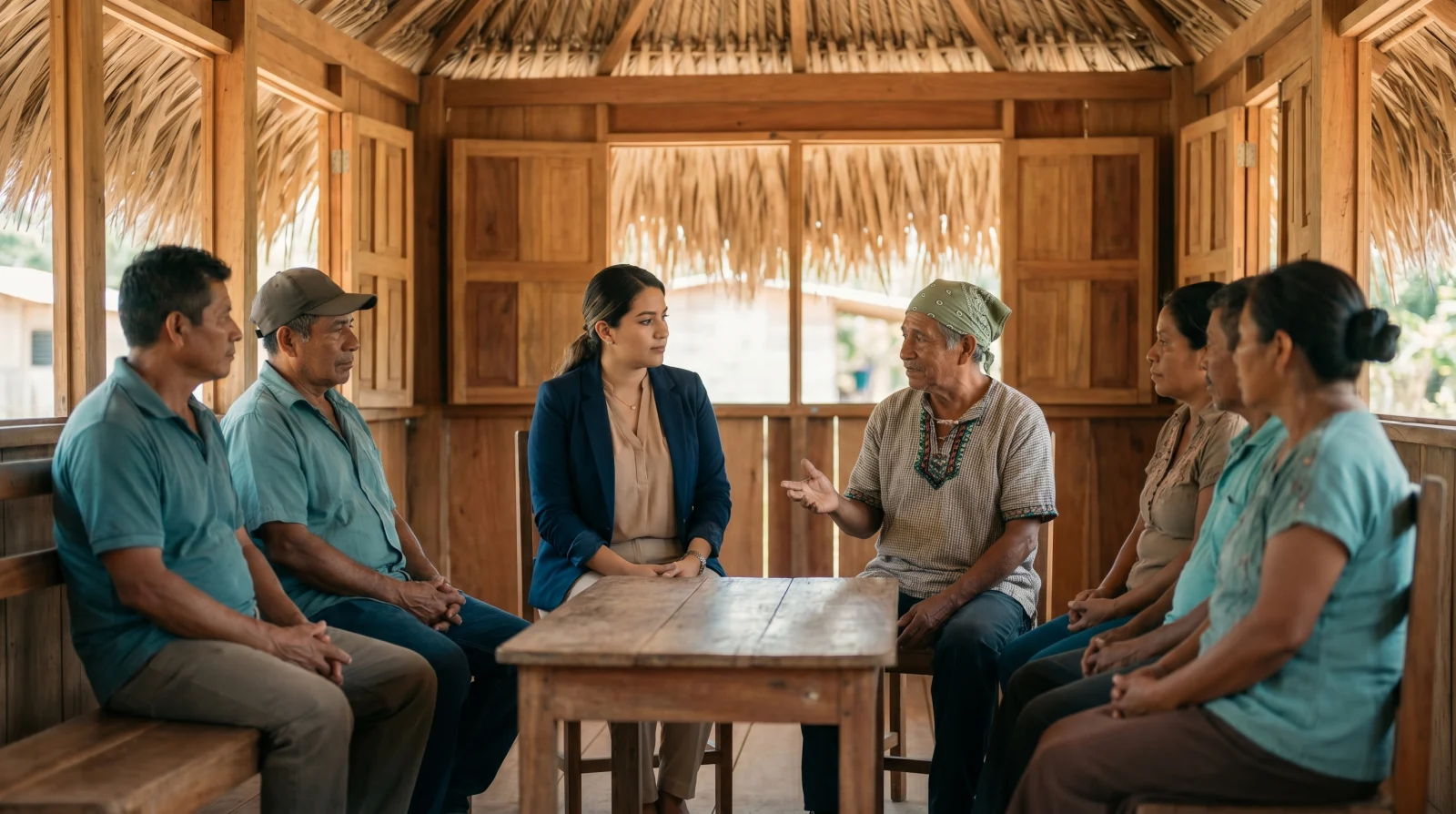
Formal dialogue — the difference between operating and standing still
Community and stakeholder consultation is much more than an information meeting. It is a formal, documented process that involves participatory methodologies, conflict management, legal documentation of agreements and compliance with international Free, Prior and Informed Consent (FPIC) standards. Mishandled, a consultation can paralyse a project for years; well handled, it builds the social legitimacy that sustains operations long term.
Service scope
- Mapping and characterization of relevant stakeholders
- Design of a participatory consultation methodology
- Facilitation of dialogue tables and workshops
- Legal documentation of agreements and commitments
- Implementation of FPIC protocols where applicable
- Ongoing relationship management throughout the project's life
Why choose ACQUA
We have proven experience in consultations with indigenous, fishing, coastal and rural communities in Honduras. We combine knowledge of the national and international legal framework with real cultural sensitivity. We have mediated in high-tension scenarios without losing technical rigor or the trust of the parties.
Sectors we support
Particularly relevant for projects in indigenous territories, traditional fishing zones, protected areas with community use and urban-coastal areas with land-use conflicts.
Preguntas frecuentes sobre Community and Stakeholder Consultation
Regulatory clarity with technical-legal judgment. We answer the most common questions from project directors and compliance officers.
What is FPIC and when does it apply?
Free, Prior and Informed Consent is a right of indigenous communities recognized in international conventions (ILO 169). It applies when a project may affect indigenous territories or collective rights. ACQUA implements FPIC under IFC and World Bank standards.
How long does a formal consultation take?
It depends on complexity. An FPIC process can last 3 to 12 months depending on project size, number of communities involved and depth of the participatory process.
Do you formally document the agreements?
Yes. All agreements are recorded in signed minutes, notarized when appropriate, and become part of the project file. Legal documentation is what sustains operations if a dispute arises.
Can you mediate active conflicts?
Yes — we have experience in scenarios where social tension is already in place. We provide a neutral technical-legal channel that helps unlock dialogue without imposing or yielding.