

What Is an Environmental and Social Impact Study? What It Includes and When It Is Required in Honduras
Executive summary — An Environmental and Social Impact Study (ESIA) is the technical instrument that identifies, predicts and assesses a project's impacts and defines the measures to prevent, mitigate and offset them. In Honduras it is the centrepiece of the SINEIA and is required of the projects with the greatest potential impact. This guide explains what it is, what it includes, who can prepare it, when the law requires it and how MiAmbiente reviews it, along with how it differs from simpler instruments.
What an Environmental and Social Impact Study is
An Environmental and Social Impact Study —ESIA— is the technical and scientific document that analyses, in advance and systematically, the effects a work, activity or project may have on the environment and on communities, and that proposes the measures to avoid, reduce or offset those effects. It is not a procedural formality or a paperwork requirement: it is an exercise in prediction and decision-making that must support, with evidence, the environmental and social viability of the project.
The purpose of the ESIA is twofold. Towards the authority, it demonstrates that the project has been assessed rigorously and that its impacts will be managed within acceptable limits. Towards the developer, it is the tool that turns regulatory uncertainty into a concrete management plan, with owners, timelines and a budget. A well-prepared ESIA protects the ecosystem, the surrounding population and the investment itself in equal measure.
The role of the ESIA within the SINEIA
Honduras assesses environmental impacts through the National Environmental Impact Assessment System (SINEIA), created under the General Environment Law and developed by its regulations. The SINEIA is administered by the Secretariat of Natural Resources and Environment (MiAmbiente/SERNA), and within it by the Directorate General of Environmental Evaluation and Control (DECA), which reviews the studies and monitors compliance.
Within this system, the ESIA is not the only instrument: it is the most demanding one. The SINEIA classifies projects according to their potential impact and assigns each category a proportionate instrument. The ESIA is reserved for projects of greater complexity and impact; those of lesser scope are resolved with simplified instruments. Understanding where a project sits on that scale is the first step in any environmental licensing process.
When an ESIA is required in Honduras
The requirement for an ESIA depends on the project's environmental categorization. The SINEIA uses a categorization table that places each type of work or activity in a category according to variables such as its nature, scale, location and the sensitivity of the setting. The greater the potential impact, the higher the category and the more demanding the required instrument.
- Lower-impact categories — resolved with simplified instruments: registrations, self-declarations or an environmental diagnosis, depending on the case.
- Intermediate categories — may require medium-scope studies, with a baseline and management measures proportionate to the risk.
- Higher categories — projects with the greatest potential impact (large infrastructure, energy, extractive industry, works in sensitive settings) require a full ESIA.
The difference between an ESIA and a simplified instrument is not one of format but of depth: the ESIA calls for field campaigns, an assessment of alternatives, impact analysis and a detailed management plan, whereas lower-category diagnoses rely on existing information and standardized measures. Misplacing the category —whether too low or too high— is one of the most frequent errors, and it tends to surface late, once it already constrains the schedule.
Who can prepare an ESIA
An ESIA cannot be prepared by just anyone. In Honduras it must be prepared by an environmental services provider —an individual consultant or a firm— registered and in good standing with MiAmbiente. That registration attests to the technical suitability of whoever signs the study and makes them co-responsible for its quality before the authority.
In practice, a quality ESIA calls for a multidisciplinary team, not a single signature: specialists in the physical environment (hydrology, air quality, soils), in the biotic environment (flora, fauna, ecosystems) and in the socio-economic and cultural environment. Coordinating that team and keeping its findings coherent is precisely what ACQUA brings to its environmental and social impact studies. A study signed by a registered consultant but without real technical backing rarely survives review.
What an ESIA includes: contents and structure
Although the detail varies with the project and the approved terms of reference, a solid ESIA in Honduras contains, at a minimum, the following components:
- Project description — nature, phases (construction, operation, closure), inputs, processes, waste and the direct and indirect area of influence.
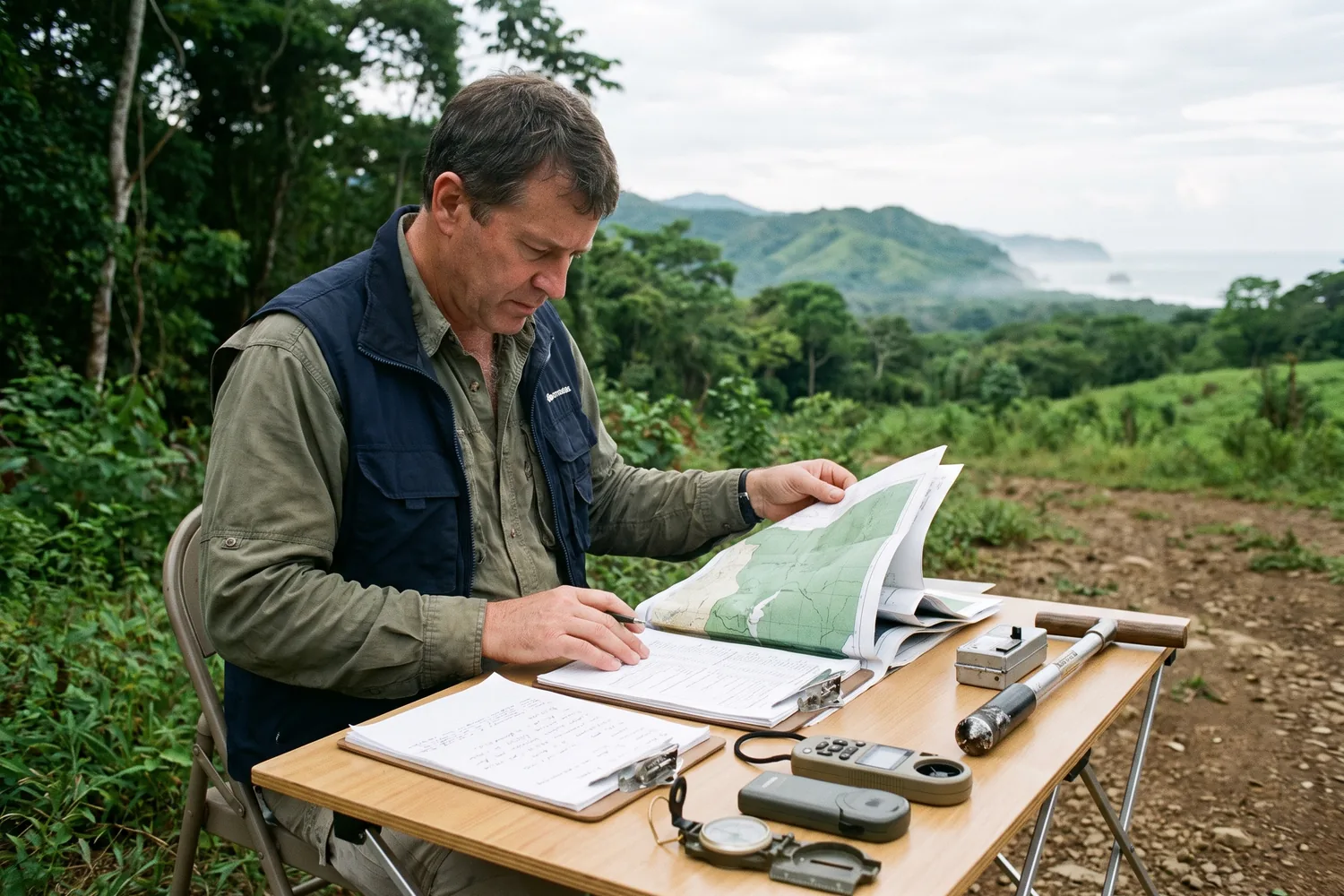
- Environmental and social baseline — characterization of the physical environment (climate, geology, hydrology, soils, air quality), the biotic environment (flora, fauna, ecosystems and species of interest) and the socio-economic and cultural environment (population, economic activities, health, heritage).
- Impact identification and assessment — analysis of the foreseeable impacts in each phase, using criteria of magnitude, extent, duration and reversibility.
- Cumulative impacts — assessment of the project's combined effects with other present or planned activities in the area, a component that weak studies tend to omit.
- Environmental and Social Management Plan (ESMP) — the operational core of the study: prevention, mitigation and offset measures, with owners, indicators, a timeline and a budget.
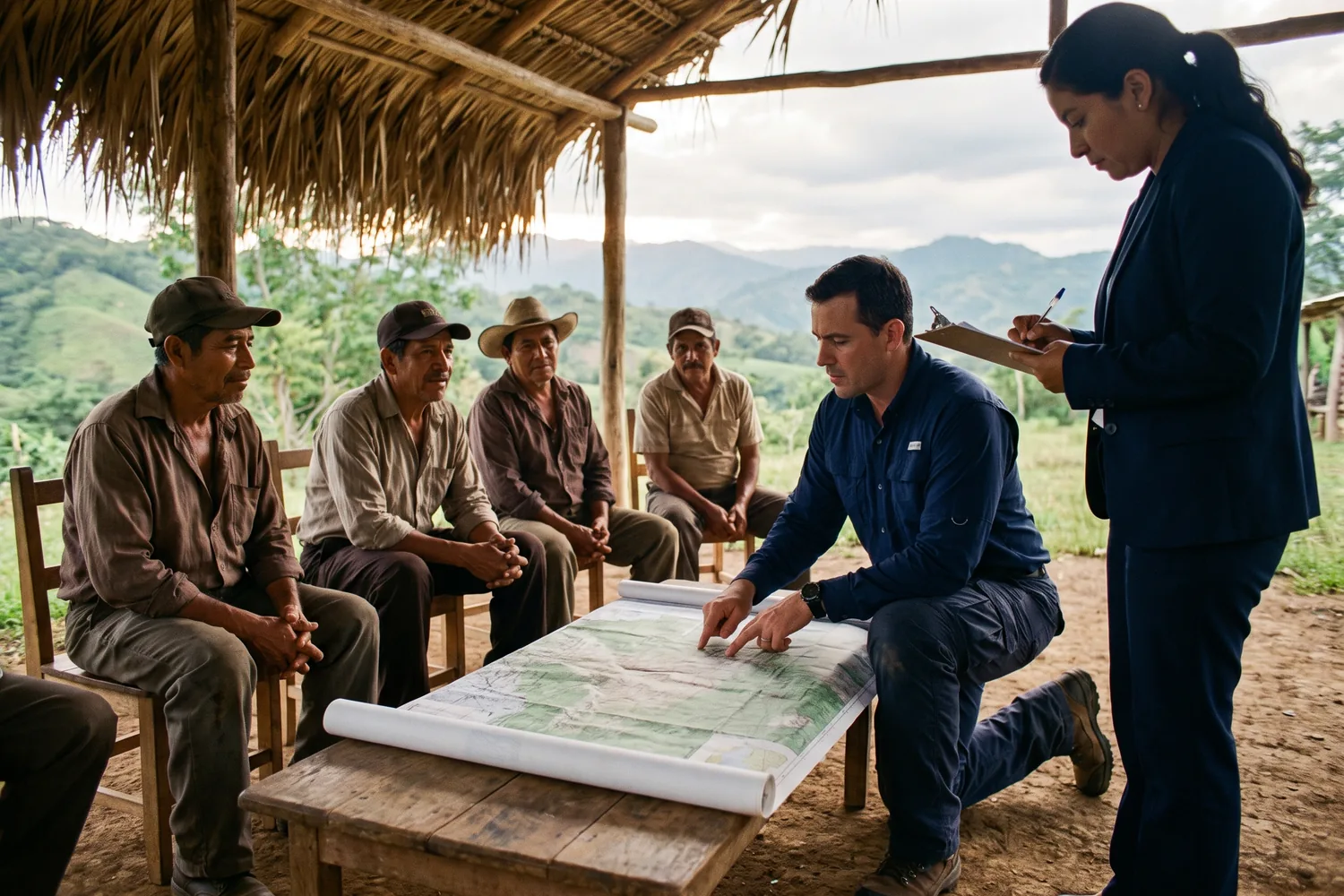
- Participation and consultation plan — mechanisms for informing and engaging with communities and the actors around the project.
- Contingency plan — response to emergencies and unplanned events.
- Closure plan — abandonment, restoration and monitoring measures after operations end.
The baseline is the foundation of everything else: without a solid field characterization, impact identification and the ESMP become speculative. That is why the quality of the baseline —particularly that of the biotic environment— is the best predictor of the quality of the whole study.
When international standards apply
When a project is financed by international banks or foreign investment, the ESIA must comply not only with Honduran regulations but also with the financier's standards. These frameworks are usually more demanding than the national legal minimum —especially on the social dimension— and they coexist with the SINEIA process rather than replacing it.
- IFC Performance Standards — the private-sector benchmark for managing environmental and social risks.
- Equator Principles — the framework adopted by commercial banks to finance large projects.
- IDB and World Bank safeguards — environmental and social frameworks applicable to operations with multilateral financing.
Designing the ESIA from the outset to satisfy both the national requirement and the financier's avoids reworking entire chapters —consultation, resettlement, biodiversity— at advanced stages. Alignment with international standards is, increasingly, the norm on projects of a certain scale.
The review process: timelines and cost factors
Once the ESIA is submitted, the DECA puts it through technical review. The process is rarely linear: the authority issues observations, the developer responds or remedies them, and several rounds may follow before a resolution. If approved, the project obtains its environmental licence, usually accompanied by a mitigation-measures contract and any applicable guarantees.
Timelines depend on the category, the quality of the study and the number of rounds of observations: a full, sensitive ESIA can take from several months to more than a year to resolve. Cost, in turn, does not follow a fixed fee but factors such as:
- The scale and complexity of the project — the number of phases, processes and components to assess.
- The sensitivity of the setting — the presence of protected areas, water bodies, communities or cultural heritage.
- The intensity of the field campaigns — biodiversity, water- and air-quality sampling, and social studies.
- The scope of consultation — the number and complexity of the actors to be engaged.
Obtaining the licence, moreover, does not close the process: it marks the start of compliance. The difference between obtaining a permit and managing compliance is, precisely, where many projects stumble after approval.
What distinguishes a strong ESIA from a weak one
Two studies can share the same formal structure and be worth very different things. A strong ESIA is recognized by concrete signals:
- A baseline with primary data — its own field campaigns, not only second-hand bibliographic information.
- Impacts that are assessed, not just listed — with explicit significance criteria and an analysis of alternatives.
- A workable ESMP — measures with owners, measurable indicators, a timeline and a budget, not generic statements.
- Real cumulative impacts and consultation — treated seriously and not as filler chapters.
- Traceability — every conclusion rests on verifiable evidence.
A weak study is approved with difficulty, accumulates observations and, even once approved, leaves the project exposed in the compliance phase. A strong one speeds up review and sustains the operation for years. If your project is approaching the SINEIA, it is worth resolving that difference from the design of the study onwards: we can help you get it right.
How ACQUA prepares environmental and social impact studies
We support the ESIA from categorization through to post-licence compliance, with an integrated technical-legal team.
- Environmental and Social Impact Studies — End-to-end preparation of the ESIA, from the terms of reference to the resolution, with a multidisciplinary team.
- Biodiversity baseline — Field campaigns and characterization of the biotic environment that give the study its primary grounding.
- Community and stakeholder consultation — Design and delivery of the participation plan and engagement with the actors around the project.
- International standards — Aligning the study with the IFC Performance Standards, the Equator Principles and the IDB and World Bank safeguards.
Frequently asked questions
What exactly is an Environmental and Social Impact Study (ESIA)?
It is the technical document that identifies, predicts and assesses a project's environmental and social impacts in advance, and that defines the measures to prevent, mitigate and offset them. In Honduras it is the most demanding instrument of the SINEIA and supports, with evidence, the environmental and social viability of the works with the greatest potential impact.
When is an ESIA required in Honduras?
When environmental categorization places the project in the categories of greatest potential impact. The SINEIA assigns each type of work a category based on its nature, scale, location and the sensitivity of the setting: lower-impact projects are resolved with simplified instruments, while larger ones require a full ESIA with a baseline and a management plan.
Who can prepare an ESIA?
An environmental services provider —a consultant or firm— registered and in good standing with MiAmbiente, who signs the study and answers for its quality before the authority. In practice, a solid ESIA also requires a multidisciplinary team covering the physical, biotic and socio-economic environments, since a single specialist rarely spans every dimension of the analysis.
What is the difference between an ESIA and a simplified environmental diagnosis?
The difference is one of depth, not format. The ESIA requires field campaigns, an assessment of alternatives, impact analysis and a detailed management plan; lower-category diagnoses rely on existing information and standardized measures. The applicable instrument is determined by the project's environmental category within the SINEIA, not by the developer's preference.
How long does ESIA approval take?
There is no single timeline: it depends on the category, the quality of the study and the number of rounds of observations from the DECA. A full, sensitive ESIA can take from several months to more than a year. A well-prepared study, with a solid baseline and a workable management plan, reduces observations and shortens the process.
Is your project approaching the SINEIA and in need of an ESIA? ACQUA supports you from categorization through to compliance, with integrated technical-legal judgment. Request an initial conversation →
Last updated: June 1, 2026 · ACQUA Corporation, Tegucigalpa, Honduras.